T-Mobile Says No to a SpaceX MVNO and Bets on 6G: What It Means for Businesses
T-Mobile CEO Srini Gopalan ruled out an MVNO deal with SpaceX and promised to be first with 6G. Here is what happened, why it matters and what it means for businesses building connected apps and devices.
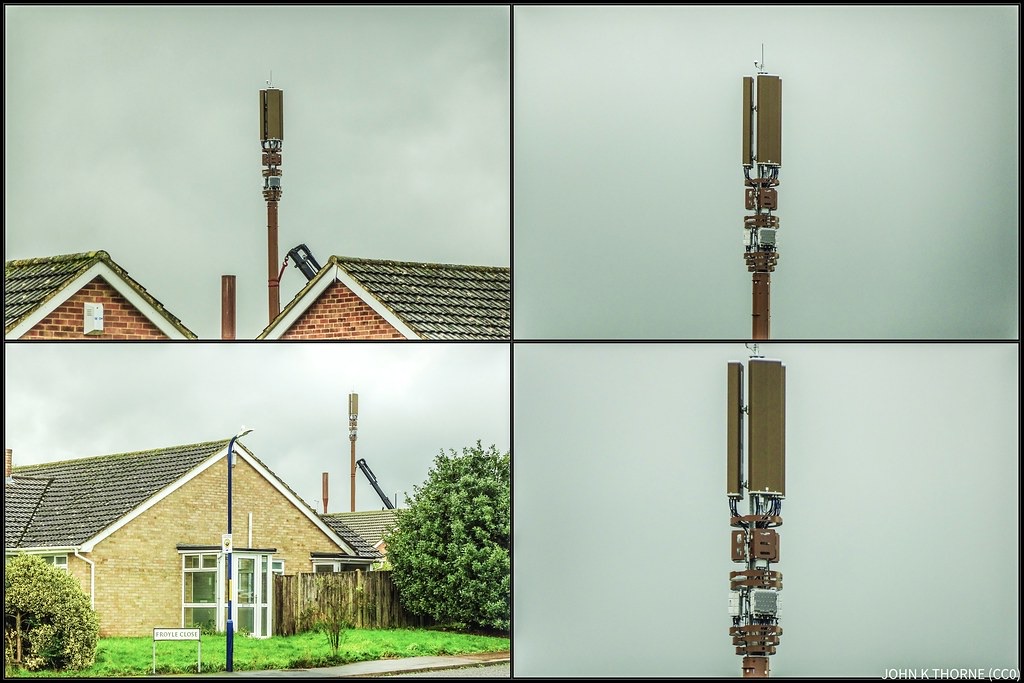
In this article
T-Mobile just drew a clear line with SpaceX. On its third-quarter 2026 earnings call, CEO Srini Gopalan said there is "no room" for SpaceX to become a mobile virtual network operator (MVNO) on T-Mobile's network, while the company also claimed it will be the first US carrier to launch 6G. Both moves point to the same fight: who will connect the next wave of AI devices, from phones and wearables to delivery robots and humanoids. Here is what happened and what it means if your business builds or relies on connected apps.
Key takeaways
- T-Mobile ruled out an MVNO with SpaceX for both consumers and physical AI, but remains open to commercial deals like satellite resale.
- T-Mobile says it will be first with 6G, with networks expected to be built around 2030.
- The carrier expects future traffic to become far more upload-heavy, driven by AI wearables, AI agents, robots and drones.
- For most businesses, today's 5G is plenty. What matters now is building apps that work well wherever your customers and crews are.
What T-Mobile said about SpaceX
SpaceX is both a partner and a growing rival for T-Mobile. Its Starlink satellites power T-Mobile's T-Satellite service, which lets phones send texts and use some apps in places with no cell coverage. At the same time, SpaceX is building its own connectivity business for phones, cars, robots and AI agents.
An MVNO deal would have let SpaceX sell mobile plans under its own brand using T-Mobile's ground network. Gopalan shut that down. According to Light Reading and Fierce Network, he said:
- No MVNO, consumer or AI. Gopalan said he sees "no room for an MVNO with SpaceX," either on the consumer side or on the physical and edge AI side.
- Satellite is a complement, not a core. T-Mobile sees satellite as "a complementary product," and any relationship with SpaceX would be "purely commercial."
- The test is new customers. Gopalan framed the question as whether an MVNO opens up a market T-Mobile cannot already reach. In his view, a SpaceX MVNO does not.
The numbers back up his caution. Satellite currently makes up a tiny fraction of T-Mobile's network traffic, and parent company Deutsche Telekom had already warned that a SpaceX MVNO could undercut carriers' retail pricing. Letting a well-funded rival resell your network at lower prices is a hard sell.
T-Mobile's 6G promise
The other headline was 6G. T-Mobile says it will be the first US carrier to launch it, though it did not give a date. CTO John Saw said "2030 will see 6G networks being built," which matches the industry's expected timeline.
A few details stand out:
- Networks that sense, not just connect. Saw said 6G will use integrated sensing and communications (ISAC), where base stations and radios also act like radar. That could enable uses like tracking drones or monitoring traffic without extra hardware.
- More spectrum is coming. Upcoming auctions for upper C-band and 2.7GHz spectrum could add capacity for 6G and boost upload speeds.
- Upload matters more. Saw expects 2030 traffic to be "still downlink heavy but increasingly uplink rich." Devices like smart glasses, cameras and robots send far more data up to the cloud than a phone streaming video does.
Physical AI is the real prize
Both stories come back to what T-Mobile and SpaceX call physical AI: robots, drones, humanoids and other machines that use AI to act in the real world. These devices need reliable, low-latency connections, and whoever provides them could win a large new market.
T-Mobile is already testing this with partners, according to Light Reading:
- Figure AI humanoid robots and Serve Robotics delivery robots.
- 5G-connected cameras for the city of San Jose.
- A "kinetic edge" with AWS that combines T-Mobile's 5G-Advanced network and edge computing with AWS cloud and AI services.
Gopalan said the company is moving beyond simply putting eSIMs in robots toward "testing how the network helps deliver the intelligence itself." He also admitted the business is in "very early innings."
That is the context for the SpaceX decision. If physical AI becomes a major revenue stream, T-Mobile wants to own those customer relationships, not hand them to a satellite rival riding on its network.
T-Mobile's Q3 2026 results at a glance
The announcements came alongside solid quarterly results:
| Metric | Q3 2026 | Change vs. last year |
|---|---|---|
| Service revenue | $19.4 billion | Up 6% |
| Postpaid service revenue | $16.3 billion | Up 9% |
| Adjusted EBITDA | $9.6 billion | Up 11% |
| Postpaid net account additions | 274,000 | Up 3% |
| Average revenue per account | $155.73 | Up 4% |
| Postpaid account churn | 1.09% | Up 12 basis points |
Source: Light Reading. T-Mobile now has about 35 million postpaid accounts and no longer reports separate additions for phones, home internet and fiber.
What this means for businesses
Unless you run a robot fleet, carrier strategy may feel far away. But the direction of travel matters for anyone building software customers use on the go.
1. Do not wait for 6G
6G networks are about four years from being built and longer from being everywhere. Today's 5G and LTE networks already support booking, payments, video, maps, field service apps and AI assistants. If your app feels slow on a phone today, the problem is almost always the app, not the network. Fast load times, light pages and efficient APIs pay off now.
2. Plan for patchy coverage
Satellite texting exists because coverage gaps are real. Contractors, delivery drivers and field technicians regularly work in basements, rural areas and new developments with weak signal. Software built for them should:
- Work offline and sync when the connection returns.
- Save progress automatically so a dropped signal does not lose a form, photo or signature.
- Send small amounts of data first, like a job status or text, and upload photos and video later.
3. Expect more upload-heavy apps
T-Mobile's prediction about upload traffic applies to business apps too. Job-site photos, video inspections, voice notes and AI assistants that listen and respond all send data up, not just down. If your team or customers capture media in the field, design for compression, background uploads and retries.
4. Watch connectivity costs for devices
If your business is planning connected devices, such as trackers, sensors, cameras or kiosks, the competition between carriers and satellite providers is good news. More options usually means better pricing and coverage over time. Build so you can switch providers without rebuilding your product.
How GPITech can help
At GPITech we build web and mobile apps that hold up in the real world, including for businesses whose customers and crews are rarely at a desk:
- Mobile and web apps that load fast, work offline and sync reliably. Custom apps and software start at $6,999.
- Booking, payment and workflow automation for local businesses, starting at $1,500.
- Dedicated engineering teams for companies building connected products, IoT or AI features. See how our dedicated teams work.
If you are weighing an app for your business, our guide on why mobile apps are essential for success is a good place to start.
Final thoughts
T-Mobile's "no" to SpaceX and its "yes" to 6G are two sides of one bet: that the next big growth in wireless will come from AI devices, and that carriers who own the network should own those customers too. For businesses, the lesson is simpler. The network will keep getting better, so focus on what you control: software that is fast, reliable and works wherever your customers are.
Have an app idea or need to fix one that struggles in the field? Get an instant estimate, or book a free strategy call to talk it through with our team.
Frequently asked questions
Did T-Mobile reject a deal with SpaceX?
T-Mobile ruled out letting SpaceX become an MVNO on its network. On T-Mobile's third-quarter 2026 earnings call, CEO Srini Gopalan said he sees no room for an MVNO with SpaceX, either for consumers or for physical and edge AI. He left the door open to other commercial deals, such as reselling satellite service, and T-Mobile's T-Satellite service already runs on Starlink satellites.
What is an MVNO?
An MVNO, or mobile virtual network operator, is a company that sells mobile service under its own brand while renting capacity on another carrier's network. Many low-cost phone plans work this way. A SpaceX MVNO would have let Starlink sell mobile plans that fall back on T-Mobile's ground network.
When will T-Mobile launch 6G?
T-Mobile says it will be the first US carrier to launch 6G but has not given a date. CTO John Saw pointed to 2030 as the year 6G networks will be built, in line with the wider industry's expected timeline.
What does 6G mean for small businesses?
Not much for the next few years. Today's 5G networks already handle almost every business app, from booking and payments to field service and video. 6G matters more for future uses like robots, drones, AI wearables and sensing. The practical step now is to build software that works well on today's networks, including offline and in low-signal areas.
Written by
Kamel Khebir
Staff Software Engineer, GPITech
Kamel Khebir is a staff software engineer at GPITech, working on the engineering behind client websites, web apps and mobile apps. Kamel writes about software development, AI and building effective engineering teams.
Connect on LinkedInReady to put this into practice?
Get an instant estimate for your project in under a minute, or book a free strategy call with our team.
Keep reading
Why Intel Stock Plunged After Q3 2026 Earnings, and What the PC Squeeze Means for Your Business
Intel beat Q3 2026 estimates but its stock fell about 20% on weak guidance, a memory-driven PC slump and an Israel fab shutdown. Here is what happened and what it means for business tech budgets.
Terafab and the AI Chip Race: What It Means for Small Business AI Costs
SpaceX and Tesla's Terafab targets volume AI chip production in 2028. Here is what the AI chip race means for small business AI costs and why you should not wait to automate.
DeepSeek and Open-Source AI: What the DeepSeek Moment Changed for Businesses
DeepSeek open-source AI showed that open-weight models can compete with closed ones. Learn what it changed and how to evaluate open models for your business.